Anthropic and OpenAI secure massive hardware deals
Anthropic and OpenAI are securing massive data center and hardware deals with AMD and Nvidia to combat a critical compute shortage that is currently limiting AI model development.
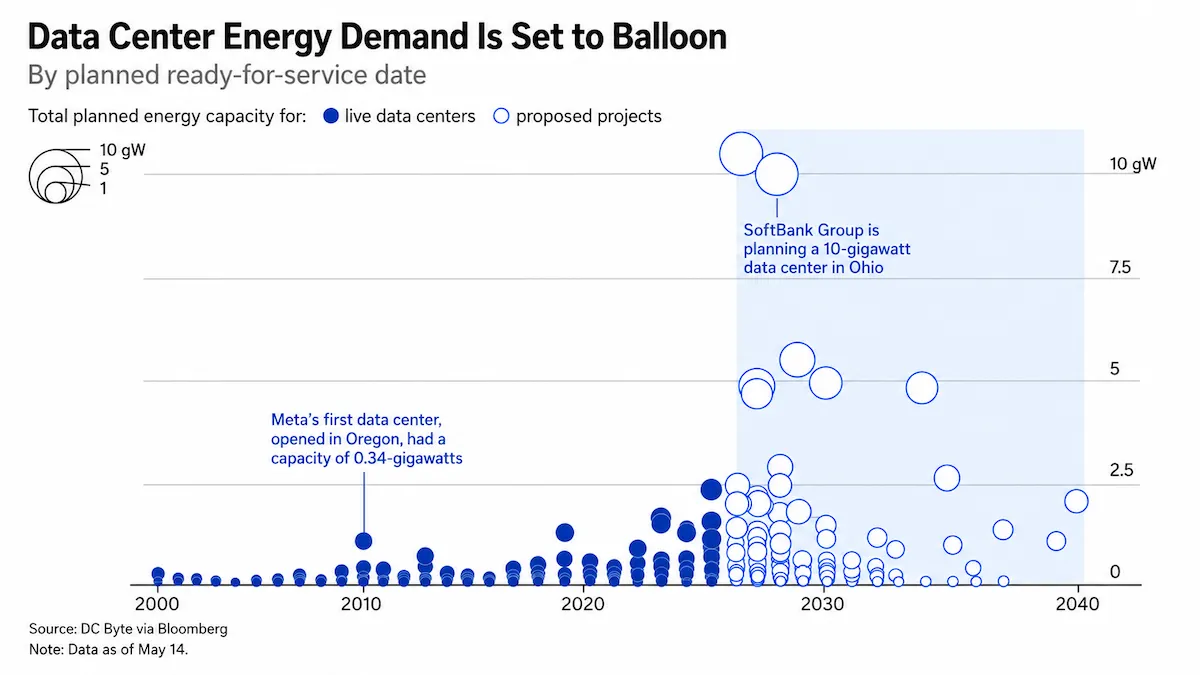
Anthropic has partnered with AMD to buy up to 2 gigawatts of its top-tier GPUs, backed by a $5 billion investment from AMD, aiming for a 2027 deployment. Meanwhile, OpenAI is spearheading its own infrastructure. It plans to construct a 3.2 gigawatt data center in southeastern Georgia by 2028, investing at least $20 billion to secure local incentives and another $10 billion for construction. Additionally, OpenAI is planning a massive 10 gigawatt facility in southern Ohio. To fund this, OpenAI—valued at $852 billion in its last round—is negotiating with Nvidia, valued at $4.792 trillion, for Nvidia to guarantee up to $250 billion of a potential $500 billion debt in exchange for chip purchases.
These moves come as financing costs rise. Meta recently issued $12.55 billion in bonds at a 7.5 percent interest rate—which is 2.875 percent above a ten-year U.S. treasury note and 0.5 percent higher than its Louisiana project—to fund a west Texas facility. This capital rush addresses a looming energy crisis. BloombergNEF projects U.S. data center power demand will surge from 56.1 gigawatts, or 5.9 percent of the grid, to 194 gigawatts, or 20 percent, by 2035, leaving a projected 19 gigawatt shortfall. To combat this, Nvidia is designing a 1 megawatt energy conversion sidecar to make power transfer 20 percent more efficient, boosting rack capacity tenfold from 50kW at 415 volts AC to 500kW using 800 volts DC.
For AI practitioners, this infrastructure war directly dictates the boundaries of model development. OpenAI president Greg Brockman recently noted that compute limitations force "hard decisions on what models we actually train." Until these multi-gigawatt facilities come online, developers will face restricted API access, higher API costs, and delayed rollouts of next-generation models. However, relief may come through open standards. Sachin Katti, OpenAI's VP of compute strategy, announced plans to open-source their efficient data center designs, mirroring Meta's 2011 Open Compute Project. This could eventually democratize hardware efficiency, helping smaller enterprises optimize their own private clusters amidst a persistent global compute squeeze.
This is our own summary of reporting by The Batch