ByteDance Trains China's Largest AI Model
ByteDance is reportedly training a massive ten-trillion-parameter AI model, a move that could position the TikTok parent company to challenge top-tier American labs like Anthropic and xAI.
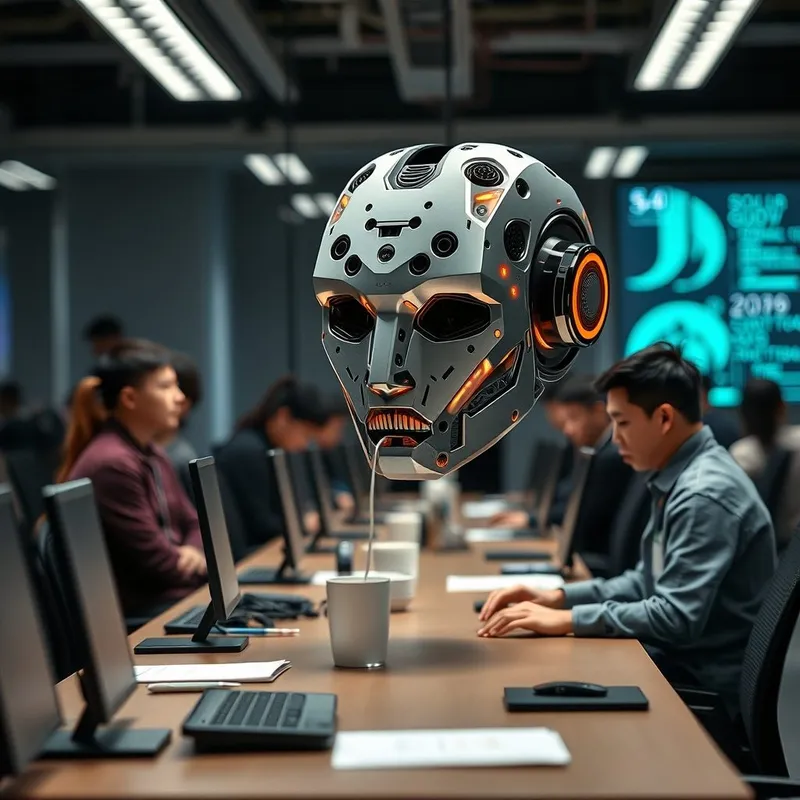
ByteDance, the parent company of TikTok, has commenced the pretraining phase for a massive artificial intelligence model expected to feature up to ten trillion parameters. According to a report from the Financial Times citing three anonymous insiders, this project represents a massive scale-up for the Chinese AI landscape. If successful, the new model will be three times larger than Moonshot's Kimi K3, which currently holds the title of the largest AI model developed in China.
This scale puts ByteDance's upcoming system in direct competition with the world's most advanced frontier models. Industry estimates place Anthropic's unreleased Mythos 5 at approximately eight trillion parameters, though the company has not officially confirmed this figure. Meanwhile, Elon Musk has noted that xAI is training Grok variants with six and ten trillion parameters using its Colossus 2 computing cluster. ByteDance's model is currently in pretraining, a foundational phase that typically spans three to six months.
To achieve these ambitious goals, ByteDance founder Zhang Yiming has instructed the company's 2,000-person Seed engineering team to focus on securing world-leading capabilities over the long term. Crucially, the development team has reportedly avoided distillation—the practice of training a system on outputs generated by rival models—for more than a year. This shift toward purely original training data suggests a commitment to building a highly robust, independent foundation model from scratch.
For AI practitioners and developers, ByteDance's massive investment signals a major shift in the geopolitical distribution of compute power and model sophistication. A ten-trillion-parameter model trained without distillation could offer unprecedented reasoning capabilities and linguistic nuance, particularly for Chinese-language applications. If ByteDance successfully deploys this system, global developers may soon have access to a highly competitive alternative to Western frontier models, potentially driving down API costs and accelerating the deployment of hyper-scale enterprise AI solutions.
This is our own summary of reporting by The Decoder