IFR Report Reveals 5 Million Robots Already Run Factories
A new International Federation of Robots report shows five million industrial machines already run global factories, highlighting a critical need for immediate security and access governance.
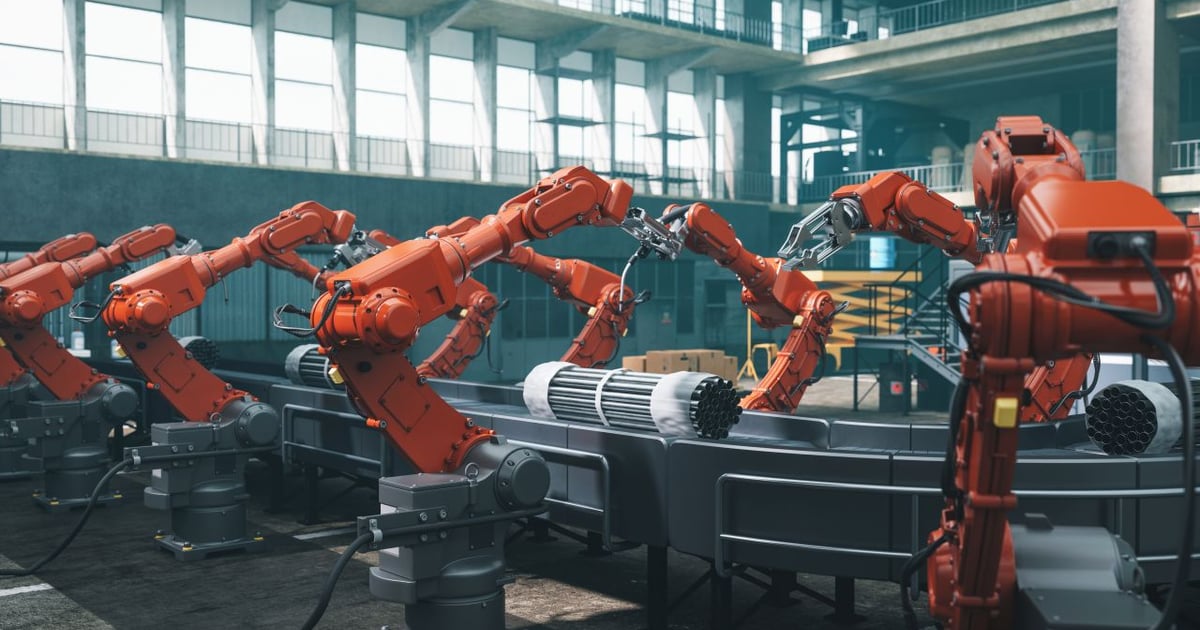
The International Federation of Robots (IFR) released its latest World Robotics Report, revealing that approximately five million robots are currently operating in factories worldwide. While humanoid robots dominate industry discussions, they represent a tiny fraction of this active workforce. In 2025, only about 7,000 humanoid robots were sold for industrial and professional service applications, compared to roughly 500,000 traditional industrial robots installed during the same year. The report noted that Asia led this deployment growth, followed by the Americas, while Europe experienced slower expansion.
This massive, growing base of traditional machines presents immediate security challenges that are often overshadowed by the hype surrounding humanoids. Kumar Sokka, the group CEO of Acre Security, warns that organizations must shift their focus toward governing what these active machines are authorized to do. Because these robots act as non-human agents moving through physical spaces, entering restricted areas, and working alongside humans, they require robust access-control systems. Sokka points out that the primary risk is not a dramatic robotic malfunction, but rather thousands of active machines holding persistent, unmanaged access rights.
Despite the current dominance of traditional industrial arms, the long-term potential for humanoid robots remains vast. George Pappas, a robotics professor and director of the Singh Program in AI at the University of Pennsylvania, explains that the true market for humanoids lies outside factory walls. These machines are designed for environments built for humans, such as homes, hospitals, and retail stores. While 7,000 units is a small starting point, AI is rapidly making these general-purpose machines viable for spaces where people live and work.
For enterprise technology leaders and factory managers, these findings demand a dual-track strategy. Practitioners must immediately update their security frameworks to treat industrial robots like employees, assigning them defined digital identities, specific permissions, and revocable access credentials. Simultaneously, strategic planners should optimize their existing industrial fleets while preparing for the next wave of AI-driven personal and collaborative robots that will operate in less controlled, human-centric environments.
This is our own summary of reporting by AI Business