OpenAI Deploys AI Agents to Maintain ChatGPT Speed
To handle a massive surge in code deployments driven by its own developer tools, OpenAI is using autonomous AI agents to continuously monitor and optimize ChatGPT's performance.
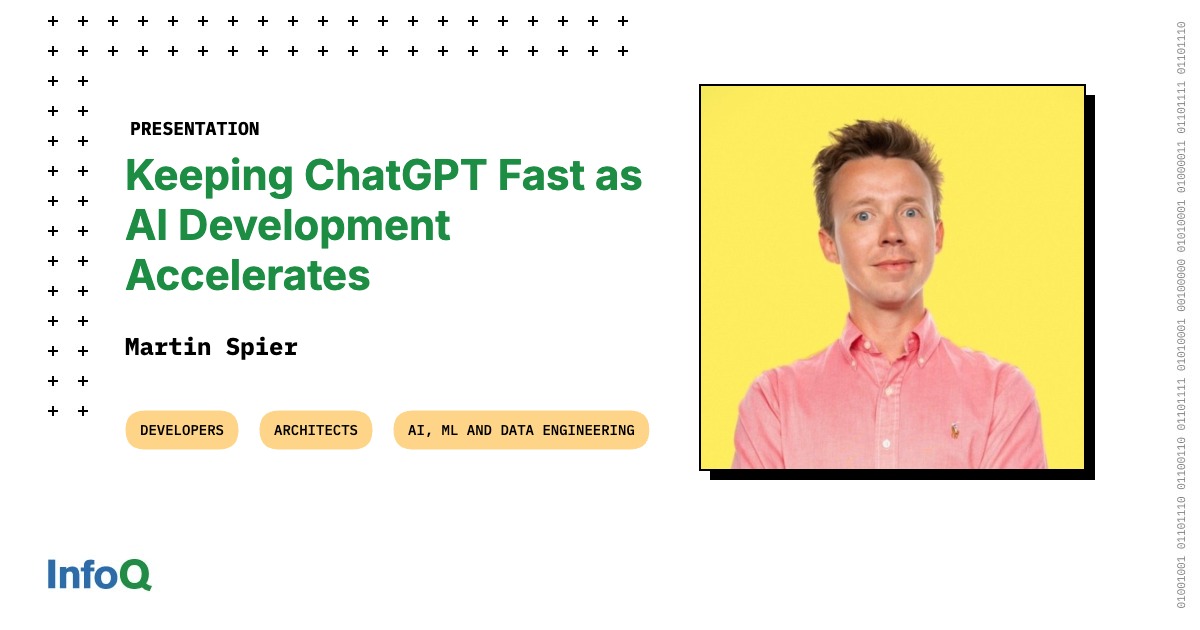
OpenAI is leveraging always-on AI agents to automate performance profiling, regression detection, and continuous optimization for ChatGPT. According to Martin Spier, the head of ChatGPT performance at OpenAI, the rapid adoption of agentic coding tools like Codex has dramatically accelerated the company's software development lifecycle. By late last year, the volume of pull requests merged per engineer each week had surged by 70 percent, with developers frequently managing seven to ten tasks in parallel.
This massive influx of code changes poses unique infrastructure challenges for a platform that reached one million users in five days and grew to 900 million weekly active users by February. Spier noted that even minor code modifications, such as extra conditional statements or data structures held in memory, compound over time to degrade latency and consume finite hardware resources. To prevent these micro-regressions from impacting global users, OpenAI's performance team had to accelerate its own workflows.
The solution involves deploying specialized AI agents that continuously scan the codebase for optimization opportunities. These agents can identify latency hot paths, analyze CPU usage, and optimize memory allocations in parallel. When a performance regression is detected, the automated system can troubleshoot the issue, propose a code fix, and run benchmarks to verify the solution before human engineers intervene.
For software practitioners, Spier emphasized that maintaining application speed requires looking beyond raw model inference metrics like tokens per second. A complete performance strategy must account for the entire user journey, including client-side processing, network latency, serialization, and data fetching. By decomposing latency into distinct layers and aligning performance targets with user expectations, developers can build scalable architectures capable of surviving viral traffic spikes.
This is our own summary of reporting by InfoQ AI