Valar Atomics raises $1B for data center reactors.
Valar Atomics has raised $1 billion in Series B funding to mass-produce small, waterless nuclear reactors, offering AI data centers a way to bypass grid bottlenecks and water constraints.
On August 3, 2026, Valar Atomics announced a $1 billion Series B funding round alongside a $200 million credit facility to transition from testing a single reactor to mass-producing them. Sequoia Capital led the equity round, with partner Shaun Maguire joining the board, alongside investors like Valor Equity Partners and Conviction. Erebor led the debt facility, supported by J.P. Morgan, Crescent Cove, and Hercules Capital (HCXY). Founder and chief executive Isaiah Taylor stated that the capital will help the company shift from demonstrating single-system operability to manufacturing reactor fleets at scale.
Valar's strategy relies on vertical integration, including manufacturing its own TRISO fuel at on-site labs. The company's development timeline has accelerated rapidly: its graphite-moderated NOVA core took two years to complete, reaching zero-power criticality on November 17, 2025, at a Los Alamos National Laboratory facility. In contrast, its Ward 250 reactor took just seven months to reach self-sustaining criticality on June 18, 2026, under the Department of Energy's Reactor Pilot Program. This marked the first time a private company achieved criticality outside a national laboratory.
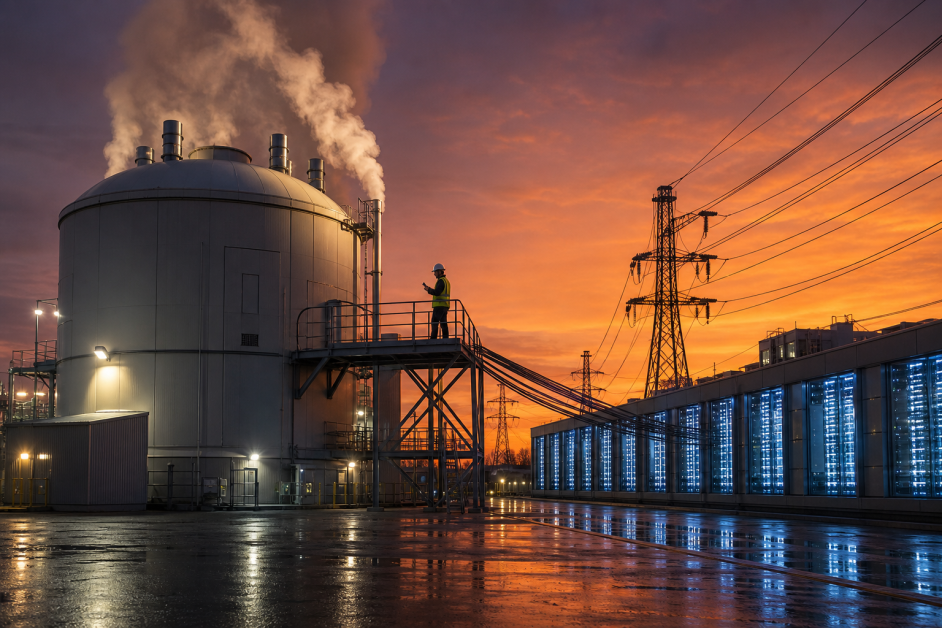
For AI infrastructure practitioners, this manufacturing scale-up addresses critical bottlenecks in power and cooling. Shortly after Ward 250 went critical, Valar funneled electricity from the reactor into an Nvidia Blackwell processor. The two companies are now collaborating on a waterless 30-megawatt AI factory. Because Valar's reactors use helium coolant instead of water, they can be sited directly behind the meter at data centers. This setup allows operators to bypass lengthy utility interconnection queues and local water disputes.
While a 30-megawatt installation is modest compared to massive projects like a 600-megawatt campus in Texas, Valar's gigasite model aims to make up the difference through repetitive manufacturing. Instead of purchasing power from third-party utilities, AI operators can deploy identical, factory-built reactors directly on their own land, with each subsequent unit becoming cheaper and faster to construct.
This is our own summary of reporting by Unite.AI